Zwiększ stabilność stóp
Grow Foot Stability
🇺🇸 English
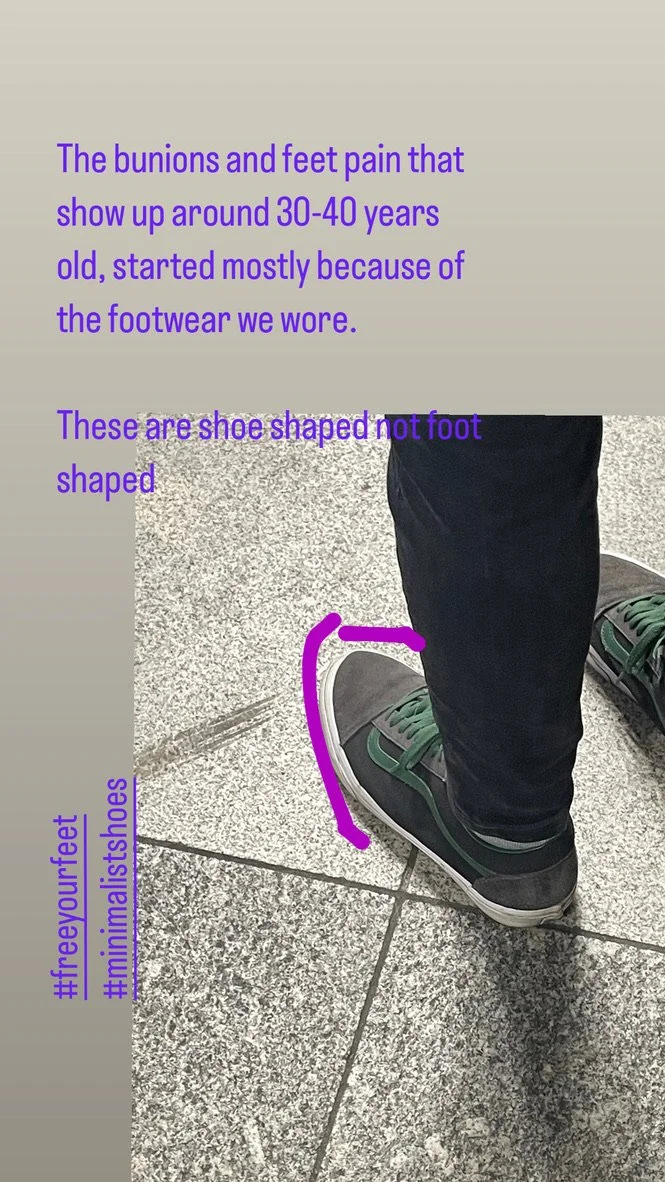
The foot should be aligned with the lower leg, but in many people, the foot tilts outwards.
This leads to the arch falling down, which can impact various muscles and structures throughout the body.
Consequences:
• Ankle twisting, internal rotation of the knee and pelvis
• Foot issues (hallux valgus, foot pain, ankle instability, Achilles tendon problems)
• Potential effects on the knee, hip, pelvis, low back, shoulders, neck, and even the head
🇵🇱 Polski
Stopa powinna być wyrównana z podudziem, ale u wielu osób przechyla się na zewnątrz.
Prowadzi to do obniżenia łuku stopy, co może wpływać na różne mięśnie i struktury w całym ciele.
Konsekwencje:
• Skręcenia kostki, wewnętrzna rotacja kolana i miednicy,
• Problemy ze stopami (halluks valgus, ból stopy, niestabilność kostki, problemy ze ścięgnem Achillesa),
• Możliwe skutki dla kolana, biodra, miednicy, dolnej części pleców, barków, szyi, a nawet głowy.
Free Your Feet
🇺🇸 English
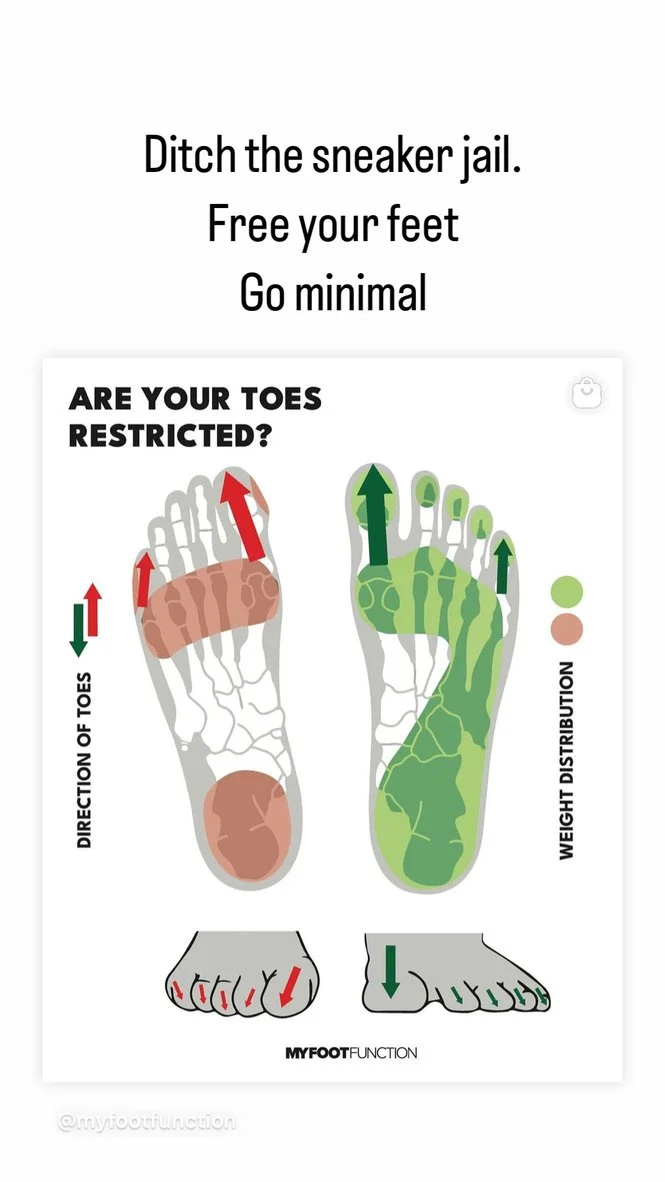
When you stand, the foot is supposed to be firmly on the ground in three locations. These are below the heel, and at the base the big toe and the base of the little toe. The most common problem in the foot is a dropping of the main arch causing twisting of the bones around the ankle and of the foot.
🇵🇱 Polski
Kiedy stoisz, stopa powinna być mocno osadzona na ziemi w trzech miejscach. Są to miejsca pod piętą, u podstawy dużego palca i u podstawy małego palca. Najczęstszym problemem stopy jest opadnięcie głównego łuku powodujące skręcenie kości wokół kostki i stopy.
🇺🇸 What can you do?
Stretch your foot towards your nose and rub ice up the back of your calf muscle for 30 seconds on the inside and outside of the muscle
Follow this by massaging up the muscle. Use a cream as a lubricant.
Massage each section of the muscle twenty times.
This needs to be done with enough pressure that you feel a slight discomfort and always up the leg – NEVER down towards the foot.
🇵🇱 Co możesz zrobić?
Rozciągnij stopę w kierunku nosa i pocieraj lodem tylną część mięśnia łydki przez 30 sekund po wewnętrznej i zewnętrznej stronie mięśnia
Następnie masuj mięsień w górę. Użyj kremu jako środka smarującego.
Masuj każdą część mięśnia dwadzieścia razy.
Musisz to robić z wystarczającą siłą, aby poczuć lekki dyskomfort i zawsze w górę nogi – NIGDY w dół w kierunku stopy.